

Classic E
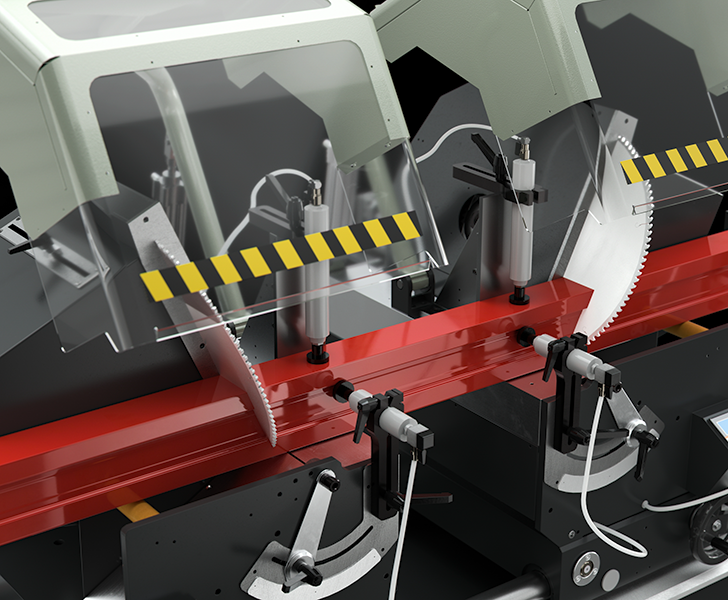
Electronic twin-head cutting-off machine with automatic traverse of the moving cutting head powered by brushless motor with numerical control system. Pneumatic control of the angular setting in three fixed positions 90°, 45° and 22°30’ (external) or with mechanic system for manual adjustment of intermediate angles. Hydro-pneumatic blade feed.
Technical data

Included
Available
Mobile heads tilting
Rotation of the heads around the horizontal axis is by means of pneumatic cylinders, and the angles that can be obtained range from 90° up to 22°30' externally; intermediate angles are obtained by means of special manually adjustable stops. Mobile units are equipped with integral pneumatic drop-down protections of the machining area.
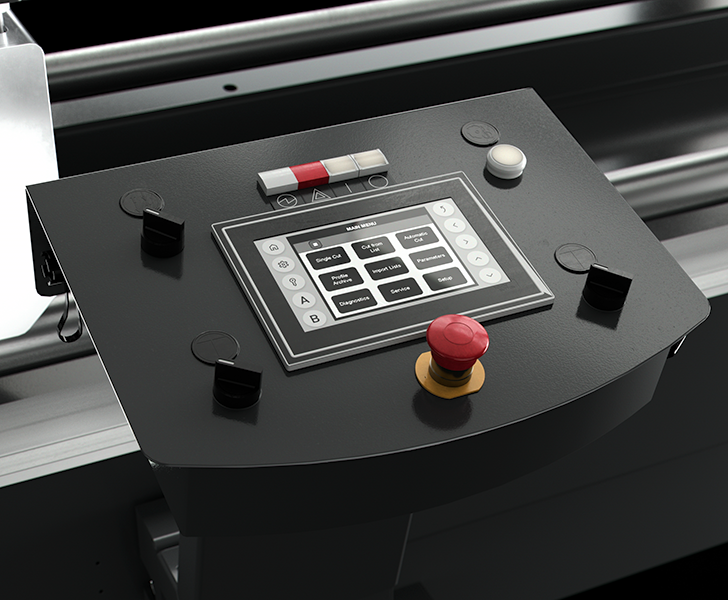
Control
The control panel, installed on a support sliding on bearings along the front side of the machine, allows correct mobile heads positioning in accordance with the required cutting schedule. The interface uses a 7” touch-screen and fully personalised software and is packed with bespoke functions that are unique to this machine. The machining cycle can be optimised by creating cutting lists, thereby reducing scrap and cycle times for parts loading-unloading.
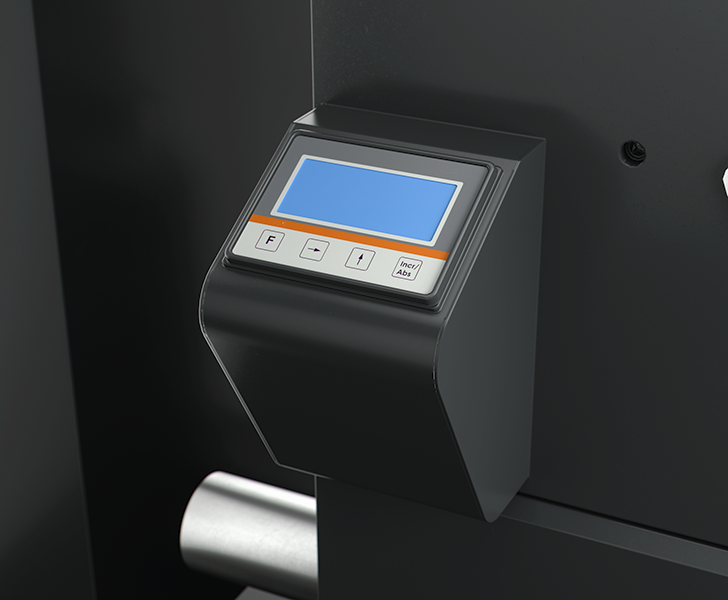
Digital viewer for intermediate angles (Optional)
In the presence of pneumatic tilting of the moving heads, the intermediate angle viewer allows the tilting of the cutting unit to be identified with absolute precision, ensuring the accuracy of the cut profiles. Especially useful in making out-of-square cuts, it allows the operator to quickly and accurately identify the required angle.
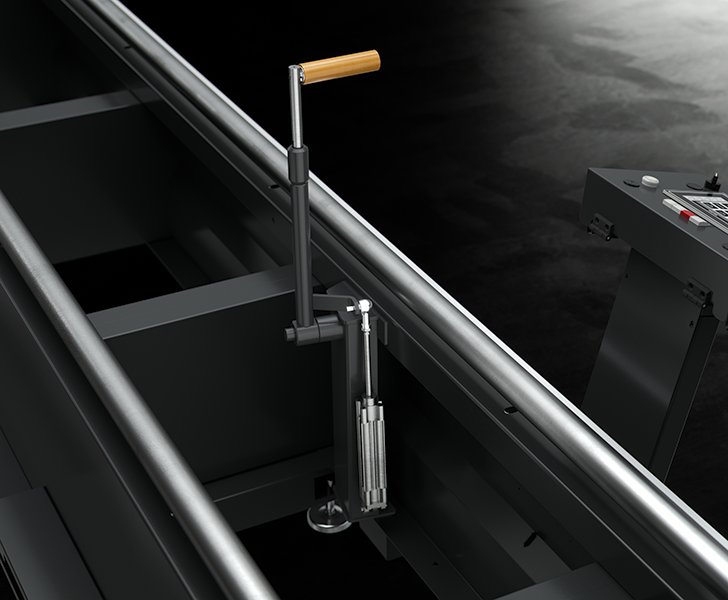
Pneumatic intermediate support (Optional)
The pneumatic intermediate support is extremely useful when cutting light profiles of considerable lengths. In this case, the pneumatic support will, automatically, provide the ideal condition to support the profile. This accessory is available for all lengths, but is specifically recommended on machines having 5- and 6-meter useful cuts.
Electronic profile thickness gauge (Optional)
This refined profile thickness control system enables automatic correction of the cutting dimension according to the actual size of the profile, with relative tolerance resulting from surface treatments such as painting, anodising, etc. The device can be used at the operator's discretion and in various modes according to different probing cycles resulting in correction of the entire cutting list, including the macrostructure formula.
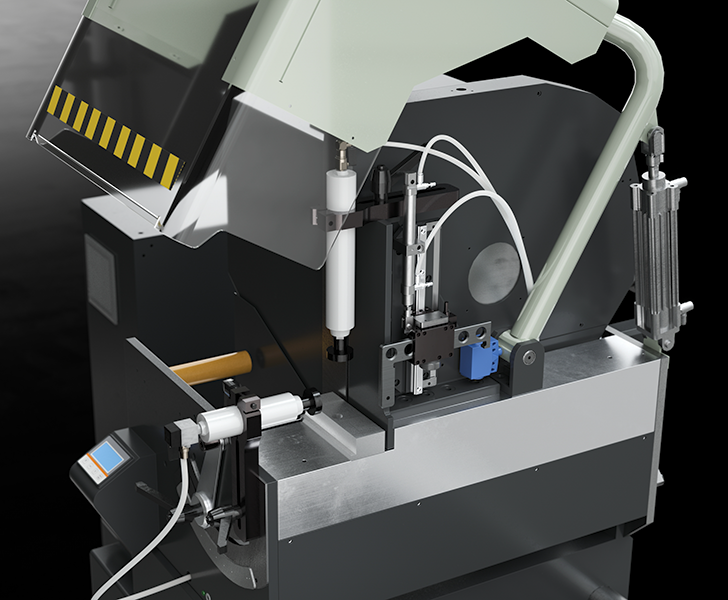
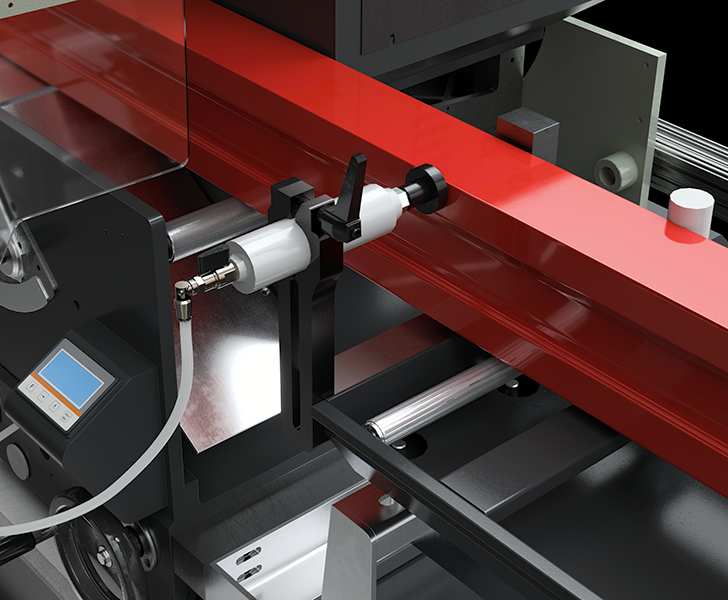
Additional vice for profile support on roller conveyor (Optional)
After each cut, the remaining profile short cut tends to fall on the roller conveyor, with the risk of hitting against the blade when the cut-off phase is still in progress. This movement may damage both the workpiece itself and the one just cut. The additional vice installed on the roller conveyor prevents this problem by keeping the profile locked for the entire duration of the cut-off cycle.